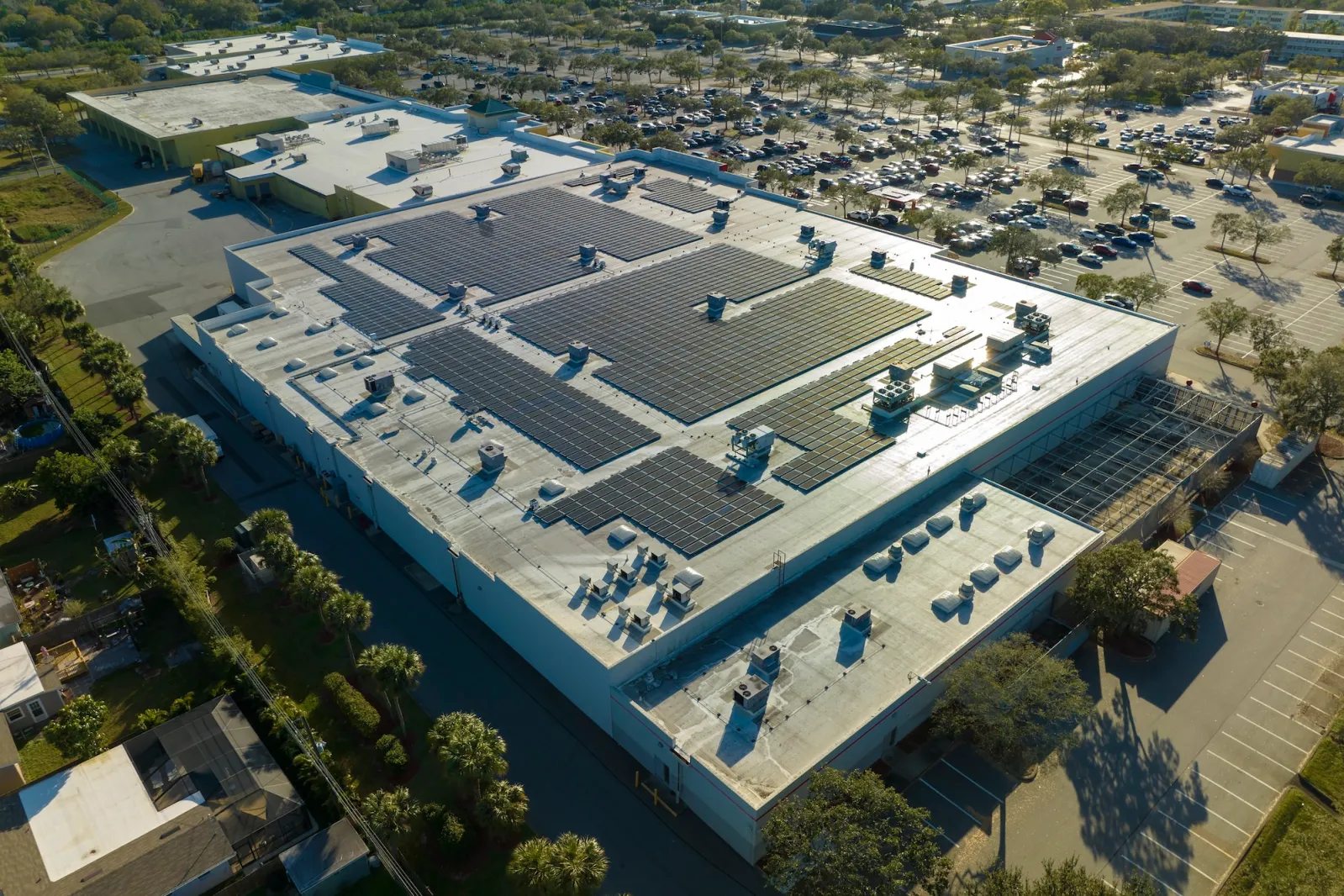
Delaware Statutory Trust sponsors acquiring commercial assets in the Wilmington, North Carolina market are entering a coastal economy that has grown substantially on the back of retiree migration, healthcare expansion, and a developing film and technology sector, while carrying a hurricane exposure profile that any responsible DST underwriting must treat as a primary risk factor rather than a footnote disclosure. Wilmington sits at approximately the same latitude as Jacksonville and is historically one of the most active hurricane landfall zones on the East Coast. Cape Fear serves as a geographic funnel for Atlantic storm systems, and the city has absorbed direct hits from major hurricanes within living memory that produced catastrophic damage across the commercial real estate inventory. DST sponsors who acquire Wilmington commercial assets without a hurricane-calibrated roof condition report and reserve model are presenting passive investors with a risk profile that has not been honestly quantified.
The Cape Fear coast's hurricane exposure is not simply a frequency question, it is a severity and proximity question. Storms that make landfall near Wilmington can produce sustained winds and storm surge conditions that exceed what most inland or even other coastal markets experience, and the compounded effect of wind, driving rain, and potential storm surge flooding creates conditions under which even well-maintained commercial roofs may sustain damage. A pre-acquisition inspection for a Wilmington DST property must specifically assess wind uplift resistance, edge metal and coping cap attachment adequacy for coastal wind exposure categories, parapet structural integrity, and drainage capacity for rainfall intensities associated with tropical weather systems. These are not standard inspection items in inland markets, they are Wilmington-specific requirements that reflect the city's documented hurricane history.
Saltwater and salt air corrosion affects commercial roof metal components throughout the Wilmington metro area, particularly in properties near the Cape Fear River waterfront, Wrightsville Beach, and Carolina Beach. The accelerated corrosion of edge metal, drains, pipe flashings, and HVAC curb brackets in coastal salt air can reduce the service life of these components below manufacturer specifications within a DST hold period. A condition report for a Wilmington DST acquisition should document the current corrosion state of all metal roofing components and provide a replacement timeline estimate that accounts for coastal exposure, giving the offering memorandum a defensible capital schedule rather than a generic component life assumption.
The 1031 exchange identification window requires fast-turnaround inspection capability in Wilmington, which means identifying a local contractor with Florida Building Code-equivalent coastal construction knowledge, IR moisture scanning capability, and the experience to write a reserve recommendation that addresses Cape Fear Coast conditions specifically. North Carolina's coastal construction environment has developed expertise in high-wind roofing systems following the hurricane events of the 1990s and 2000s, and a Wilmington-area commercial roofing contractor who has worked through those events brings practical knowledge that national inspection checklists cannot replicate. DST sponsors should specifically verify that their inspection partner has local coastal experience rather than relying on the nearest regional provider.
Wilmington's commercial real estate market has grown significantly in the medical sector, with New Hanover Regional Medical Center and its outpatient and physician practice network anchoring substantial medical office construction along the Gordon Road and Eastwood Road corridors. Healthcare tenants in Wilmington face the same regulatory exposure related to building environmental conditions as healthcare tenants elsewhere, with the additional context that a hurricane event affecting a medical office's building envelope can trigger both a physical recovery challenge and a regulatory compliance notification depending on the nature of the affected space. Pre-acquisition inspections for healthcare-adjacent Wilmington properties should specifically assess HVAC curb penetration integrity, the state of any rooftop mechanical equipment, and the drainage capacity of the system under heavy rainfall conditions.
The Wilmington area has also seen meaningful growth in film production infrastructure and related commercial facilities, driven by EUE/Screen Gems Studios and the supporting infrastructure of vendors, production companies, and creative industry tenants. These facilities can have non-standard roofing conditions, large clear-span structures, unusual penetration patterns for lighting and mechanical systems, and roofing systems modified by tenants for specific operational requirements, that require careful pre-acquisition documentation. DST sponsors acquiring production or creative industry facilities in Wilmington should ensure that the inspection scope includes documentation of all non-standard penetrations and any tenant modifications that may affect the warranty or structural integrity of the existing roofing system.
Hold period maintenance for Wilmington DST assets requires a pre-hurricane-season protocol that is as rigorous as any Florida coastal market's annual preparation. June 1 is the Atlantic hurricane season start date, and a pre-season inspection before that date, covering drain clearance, edge metal fastening, flashing integrity, scupper adequacy, and parapet condition, is a cost-effective intervention that reduces the probability of storm-event damage reaching the interior of the building. For a DST with passive investors who are counting on uninterrupted quarterly distributions, the cost of that inspection is trivially small relative to the cost of a post-hurricane interior water damage event that disrupts tenant operations and insurance claims resolution simultaneously.
Reserve modeling for Wilmington DST offerings should reflect both the frequency and the cost premium of post-hurricane roofing work in the Cape Fear area. Contractors available for emergency and post-storm work in Wilmington are drawn from a regional pool that is simultaneously demanded across multiple coastal markets after a major hurricane event, and the premium pricing that results from that demand concentration can substantially exceed standard repair cost estimates. A reserve model that plans for repair costs at normal market rates is not adequate for a Wilmington coastal DST, the reserve should include a contingency for post-event premium pricing that reflects actual post-hurricane market conditions in the Cape Fear coastal market.
Wilmington's trajectory as a destination market for both retirees and young professionals has created a commercial real estate environment that continues to attract DST capital from sponsors who see New Hanover County's population and income growth as a durable investment thesis. The hurricane exposure that accompanies the growth opportunity is not disqualifying, it is a manageable risk for sponsors who approach it with appropriate rigor. Pre-acquisition inspection quality, hurricane-calibrated reserve modeling, and a hold-period maintenance program that treats storm season preparation as a non-negotiable annual activity are the operational foundations that allow the Wilmington DST investment thesis to hold through an Atlantic hurricane season that is likely to test every coastal property in the sponsor's portfolio.
- What hurricane-specific conditions should be assessed in a Wilmington DST roof inspection?
- Wind uplift resistance for coastal exposure categories, edge metal and coping cap attachment adequacy, parapet structural integrity, drainage capacity for tropical storm rainfall rates, saltwater corrosion of metal components, and scupper adequacy are the hurricane-specific items our Wilmington inspections address.
- How should post-hurricane contractor premium pricing be modeled in a Wilmington DST reserve schedule?
- Reserves should include a contingency above standard repair pricing that reflects post-event demand concentration in the Cape Fear coastal market, after a major hurricane, available contractor capacity is limited and pricing rises significantly above normal market rates, a cost reality that generic reserve models consistently understate.
- How quickly can you deliver a Wilmington DST roof condition report within a 1031 timeline?
- We deliver complete reports within five to seven business days of site access, including coastal-specific wind uplift and corrosion assessments, within the 45-day identification window for exchange buyers.
- What pre-hurricane-season maintenance should be specified for Wilmington DST properties?
- Annual pre-June-1 inspection covering drain clearance, edge metal and parapet fastening, scupper confirmation, flashing integrity, and documentation of any tenant-installed rooftop modifications, with written reports delivered to the asset manager as a seasonal stewardship record.
- How do you support insurance claim documentation after a hurricane event at a Wilmington DST property?
- We deploy for post-event damage assessment as a priority for active maintenance clients, producing written damage documentation with photographic evidence suitable for insurance claim filing and contractor bidding, minimizing the delay between storm event and claim resolution that affects distribution timing.