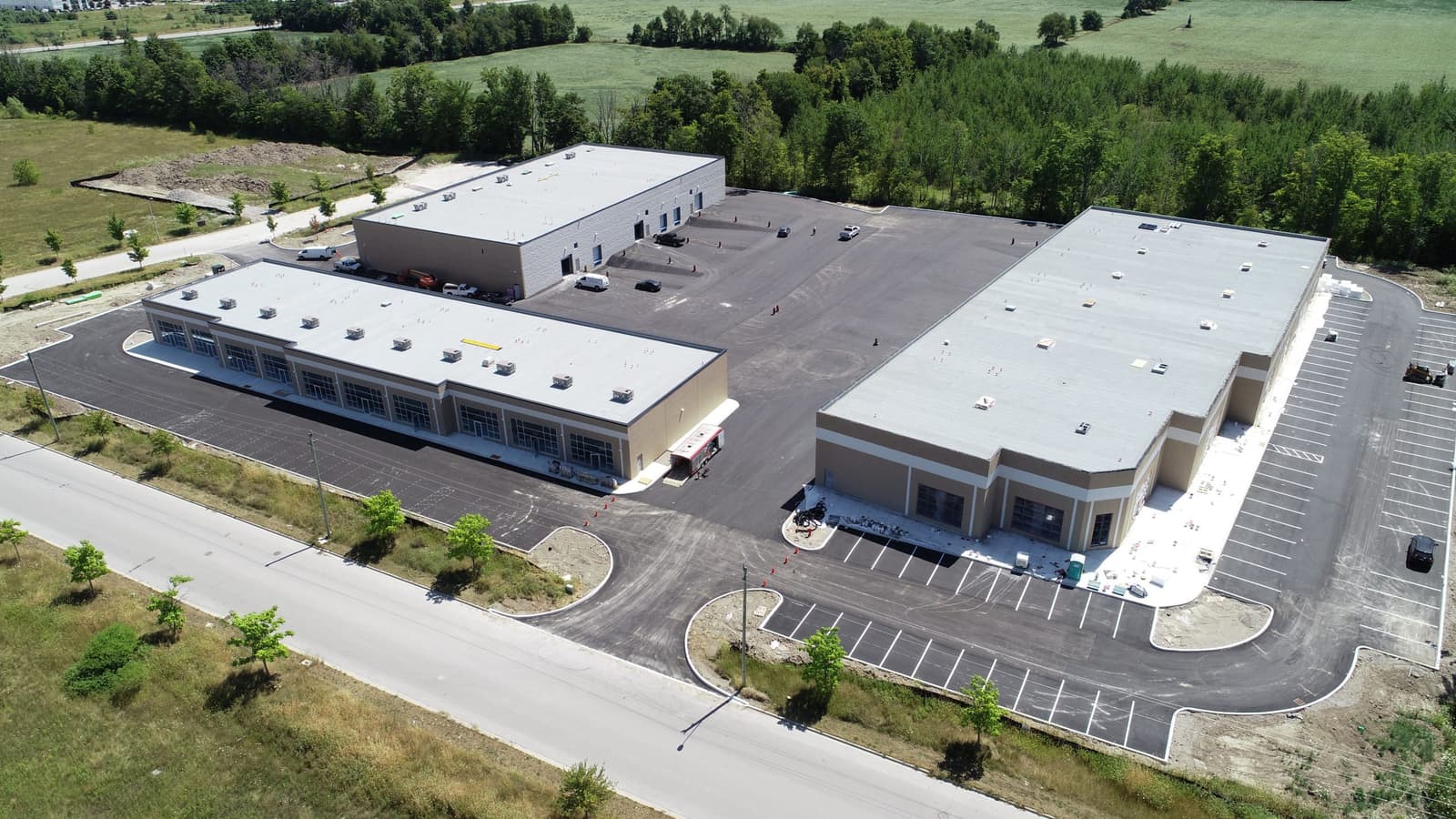
An automotive plant roof is measured in acres and disrupted in dollars per minute. Assembly, stamping, powertrain, and Tier 1 supplier buildings run continuous multi-shift production, and the plant's facility-engineering team can usually tell you the cost of an hour of unplanned downtime before they ever talk membrane. That number drives everything we do. The Wilmington region's heavy-industrial base sits along the US-421 corridor toward the Port of Wilmington and out the I-140 and US-74/76 industrial belt into Leland and the Pender County megasite areas, and the buildings there reward a roofer who plans like a logistics manager, not just a tradesman.
Acres of roof, sequenced like a project schedule
A single assembly or stamping envelope can run anywhere from several hundred thousand to a few million square feet under one roof. You cannot tear that off in one pass. We section the deck into zones, sequence tear-off and material delivery to stay inside crane reach and the available staging footprint, and keep production running in the adjacent zones while a single phase is open. Material logistics, how the loads land, where they stage, how the debris leaves, is as much of the plan as the membrane itself, and on a coast that gets afternoon thunderstorms and hurricane threats, the open zone is sized so it can be dried in fast.
Process loads on the deck
These are not empty boxes. Large make-up air units, process exhaust, compressed-air and dust-collection equipment, and conveyor supports concentrate weight and multiply penetrations across the roof. We confirm the existing deck's capacity before we add insulation thickness, and we inventory and individually flash the penetrations rather than treating the roof as open field. Ventilation volume on a plant roof is large by design, and each fan and stack curb gets detailed to the equipment actually sitting on it.
Paint shop: hot-work is the constraint
The paint shop changes the rules over its footprint. Paint operations generate solvent vapor and carry fire-suppression and environmental requirements that restrict hot work, torches, grinders, and open flame, on and around those roof zones. Over paint-adjacent areas we plan a hot-work permit program with the plant's EHS team and switch to cold-applied adhesive or mechanical attachment instead of torch-applied systems. Solvent-based adhesives are out over active paint operations; we substitute compatible cold adhesives. These are standard planning items on an automotive job, not mid-project surprises.
Press and stamping vibration
Stamping, casting, and powertrain lines put vibration into the building at frequencies a normal commercial roof never sees. Over time that vibration can fatigue membrane seams and flashings that were welded or bonded to ordinary standards. Over press-adjacent zones we tighten the welding procedure and seam design and account for the vibration exposure in the membrane spec, because a seam that is fine over an office will work-harden and split over a stamping bay.
Coastal wind on a very large roof
Wilmington's hurricane-zone wind loads matter more, not less, as the roof gets bigger. Uplift concentrates at the perimeter, corners, and around the tall rooftop equipment, and on a plant roof those edge zones add up to a lot of linear footage. We engineer the attachment to the actual deck and the local uplift pressures, with a denser fastening pattern in the high-pressure zones, and we detail edge metal to a coastal wind standard.
Documentation a corporate facilities group will accept
OEMs and large suppliers run their own facility-management standards, and the paperwork has to match. We deliver contractor safety qualifications, a site-specific safety plan, an OSHA log summary, a roof-zone diagram with a penetration inventory, daily work reports, permit records, manufacturer warranty registration, and a photographed condition survey, formatted to the plant engineering department's requirements. Tier 1 and Tier 2 suppliers get the same treatment as OEM plants, often with even less tolerance for interruption because of just-in-time delivery, so we document the production schedule and hold daily communication with the plant's facilities contact throughout.
Maintenance that protects the production line
On a plant this size, a managed maintenance program is cheaper than any single emergency. We set up scheduled inspections that map the roof zone by zone, track wet insulation with infrared, and catch failing seams, clogged drains, and corroded fasteners before they become a leak over a robot cell or an electrical room. A small repair scheduled into a planned shutdown costs a fraction of an unplanned line stop, and on a roof measured in acres the early-warning value of routine scanning is real money. We document each zone's condition so plant engineering can budget capital replacement by area rather than gambling on the whole envelope at once.
Storm exposure on a working coast
Wilmington-area plants sit in a hurricane corridor, and a breach over a stamping line or a paint booth is a production emergency, not just a building repair. We build a storm-response plan into the maintenance relationship, priority emergency dry-in, pre-staged materials, and a documented call tree, so when a system comes up the coast the plant already knows who is responding and how fast the open roof gets closed. Edge metal and equipment-screen attachment get detailed to coastal wind loads for the same reason.
Automotive Manufacturing Roofing Questions
How do you avoid interrupting production?
Production continuity governs every decision. Before mobilizing we document shift schedules with plant engineering, identify which roof zones sit over active lines, and build a zone-by-zone phasing plan that keeps work clear of running production. Dry-in is confirmed before each shift change and we hold direct contact with the maintenance foreman throughout.
How do hot-work limits over the paint shop affect the install?
Hot work over or near paint operations needs EHS pre-approval. We build the permit plan in pre-construction and specify cold adhesive or mechanical attachment over paint-adjacent zones where torch use is excluded. These restrictions are planned scope, not surprises.
What membrane do you specify for a plant-scale roof?
Usually 60-mil or 80-mil TPO mechanically attached, with fully adhered systems where paint-shop hot-work limits rule out a fastener pattern. Tapered insulation goes in over documented drainage problems, and we confirm existing deck capacity before setting insulation thickness.
Do you handle press and stamping vibration?
Yes. Press vibration can fatigue seams and flashings welded or bonded to ordinary standards. Over press-adjacent zones we tighten the welding procedure and seam design and account for the vibration exposure in the membrane spec.
Can you work on Tier 1 and Tier 2 supplier plants?
Yes. Suppliers carry the same coordination demand as OEM plants, often with tighter just-in-time pressure. We document the production schedule, phase around it, and keep daily communication with the plant's facilities contact, with closeout documentation formatted to the facility's standards.