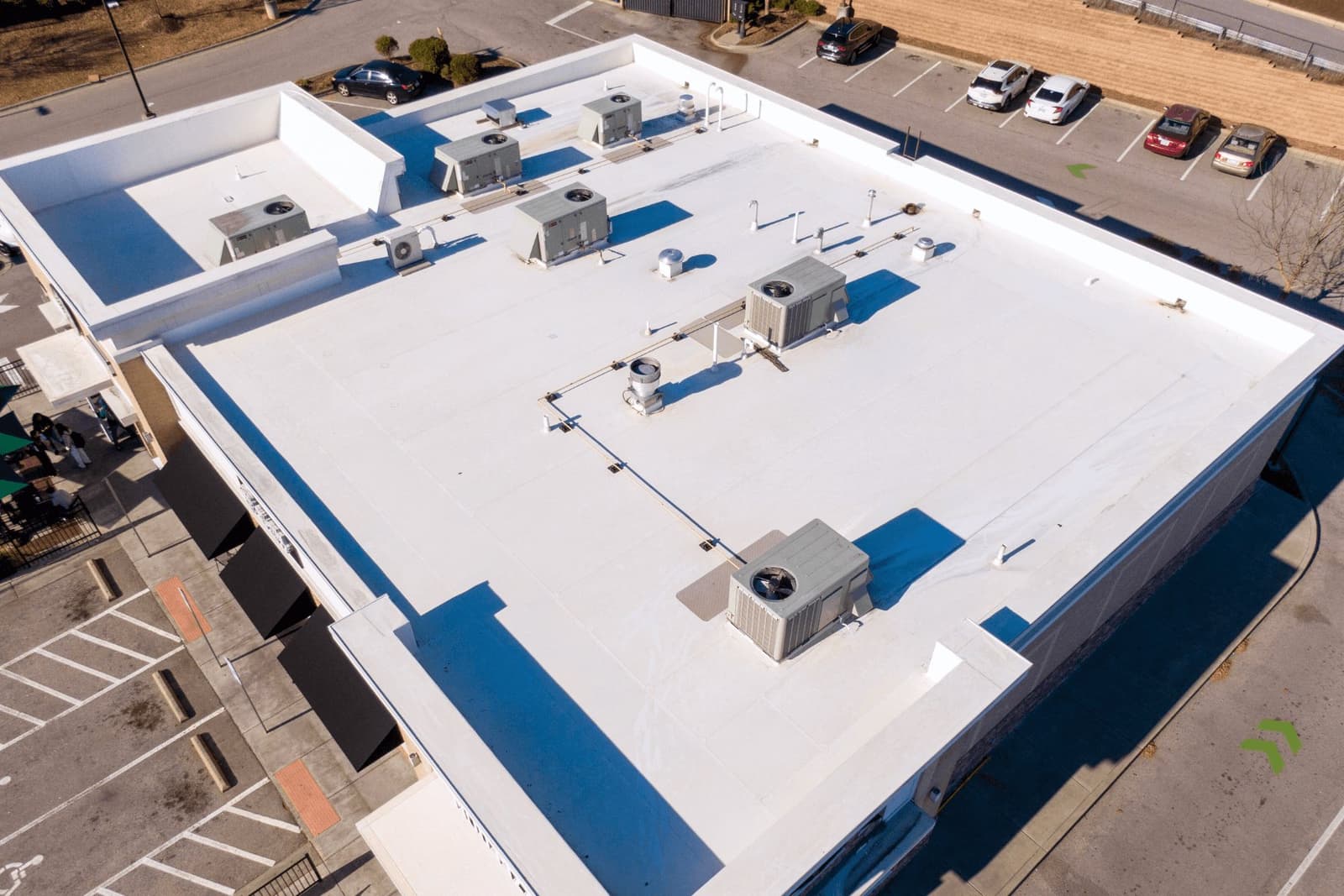
The capital planning framework for Fire Station & Emergency Services Facility Roofing in Wilmington sits within the fire department's facilities capital improvement program, typically a 5-year CIP budget that competes with apparatus replacement, technology upgrades, and new station construction for a fixed annual allocation. A fire station roof that fails between CIP budget cycles creates an emergency capital expenditure that disrupts the planned program. Proactive condition assessment and CIP budget inclusion for station roofing keeps emergency expenditures out of the program and allows planned procurement, which almost always costs less than emergency procurement.
Multi-station fire districts in Wilmington benefit from a portfolio condition assessment that allows the CIP program to prioritize roofing replacement across all stations by condition rather than by complaint. A station that's been leaking intermittently but never loudly enough to generate a work order may have more urgent roofing needs than a station that submitted a recent non-emergency repair request. Annual condition assessments across the district's station inventory give the facilities team the data to make defensible prioritization decisions in the CIP process.
Insurance recovery for Fire Station & Emergency Services Facility Roofing damage in Wilmington follows the same property insurance framework as other public facility damage, but the claims process for public facilities often involves an additional layer of documentation for the insurance carrier's public building specialist. Hail damage, wind damage, or storm-related roofing failure at a fire station requires the same GPS-tagged documentation and carrier-formatted damage assessment as any commercial property claim. We prepare insurance documentation for fire station storm damage claims in the format required by the major commercial property insurers that carry public safety facility policies.
Operational details that change the roof plan
Fire Station & Emergency Services Facility Roofing work has to be sequenced around the activity under the roof. We review loading areas, customer or patient access, tenant hours, rooftop equipment, fire lanes, interior leak history, and any areas where noise, odor, debris, or temporary closures would create problems for the building.
Those constraints change quickly across Wilmington. A roof near Independence Boulevard may need different staging than a roof near Brunswick County, while coastal exposure near Historic Downtown Wilmington can move edge metal, drainage, and temporary dry-in higher on the priority list.
The finished scope has to be usable by more than one person. We write the findings so facility teams can understand the active roof condition, property managers can coordinate occupants, and ownership can separate urgent leak control from longer-term capital work without guessing what the field notes mean.
Before work starts, we also flag the assumptions that affect price and disruption: fall protection, material staging, interior protection, temporary dry-in, waste handling, and the roof areas where deck or insulation conditions may change the recommendation after investigation.
We keep that decision record attached to the roof area instead of burying it in a generic estimate. If ownership chooses a repair path, the record shows what was intentionally left for later maintenance. If the building needs capital planning, the same notes become the starting point for alternates, phasing, exclusions, and the schedule constraints that affect final pricing.
That is also where communication gets practical: who can approve a change, when the roof can be opened, which entrances or loading areas have to stay clear, and what photos or notes need to be captured before the work is closed out.
When those details are settled early, pricing conversations are cleaner and the roof work is less likely to turn into an emergency change order.
That record also gives managers a clear baseline for the next inspection cycle.
- Map the roof into work zones that match access, safety, and building operations.
- Flag roof areas where wet insulation, ponding, traffic paths, or equipment curbs change the budget.
- Keep the scope usable for ownership, facility teams, property managers, and bid reviewers.
Fire Station & Emergency Services Facility Roofing, Capital Planning Questions
How do you incorporate Fire Station & Emergency Services Facility Roofing into a multi-year CIP budget?
We provide condition assessment reports formatted for CIP budget inclusion: a current condition score (1-5), estimated remaining service life, projected replacement year, and projected replacement cost with an inflation adjustment factor for out-year budgeting. The report format matches what Wilmington's budget office requires for CIP project justification. For multi-station districts, we assess all stations in a single mobilization and deliver a portfolio CIP summary that the fire chief and facilities director can use as a budget justification document.
What is the typical cost for fire station re-roofing in Wilmington?
Fire station re-roofing costs vary by building configuration, a single-bay neighborhood station differs significantly from a multi-bay headquarters facility. Typical cost ranges: single-bay station (2,500-5,000 SF): $45,000-90,000; multi-bay station (6,000-12,000 SF): $110,000-250,000; historic firehouse with architectural roofing restoration: add 30-60% to standard rates depending on original material specification. These ranges assume standard commercial membrane re-roofing; historic restoration costs are project-specific. We provide preliminary cost estimates for CIP budget purposes at no charge for fire district facilities teams planning their capital programs.
Can a fire station re-roofing project be phased across two budget years?
Yes, multi-year phasing is common for larger station roofing projects. A typical phasing approach: Year 1 covers the apparatus bay and training areas (highest structural complexity, highest operational impact); Year 2 covers crew quarters and administrative areas (lower complexity, standard commercial scheduling). Each phase is designed to achieve a complete, warranted subsystem, not a partial installation that leaves the building with an unwarranted transition zone between years.
How do you prepare an insurance claim for hail or wind damage at a fire station?
We conduct a post-storm assessment within 48 hours of the weather event: GPS-tagged photography of all damage, hail impact density mapping, wind displacement documentation, and a written assessment formatted for the fire district's commercial property insurer. The assessment documents the storm date, the specific damage observed, and the cause of loss attribution (storm vs. pre-existing condition vs. maintenance deficiency). The documentation package is delivered to the fire district's risk manager in the format required for the specific carrier, we're familiar with the major carriers for public safety facility policies in NC.
How does new fire station construction interact with re-roofing of existing stations?
New station construction and existing station re-roofing can share the same procurement contract if they're awarded to the same contractor, some fire districts do this to reduce administrative overhead and achieve contractor volume pricing. More commonly they're separate contracts. If both are active simultaneously, we coordinate the construction schedules to avoid pulling the same crew and supervisor in two directions at once, new construction and occupied-facility re-roofing have different scheduling constraints that don't always play well together on the same crew calendar.