A gym roof carries two problems at once: span and moisture
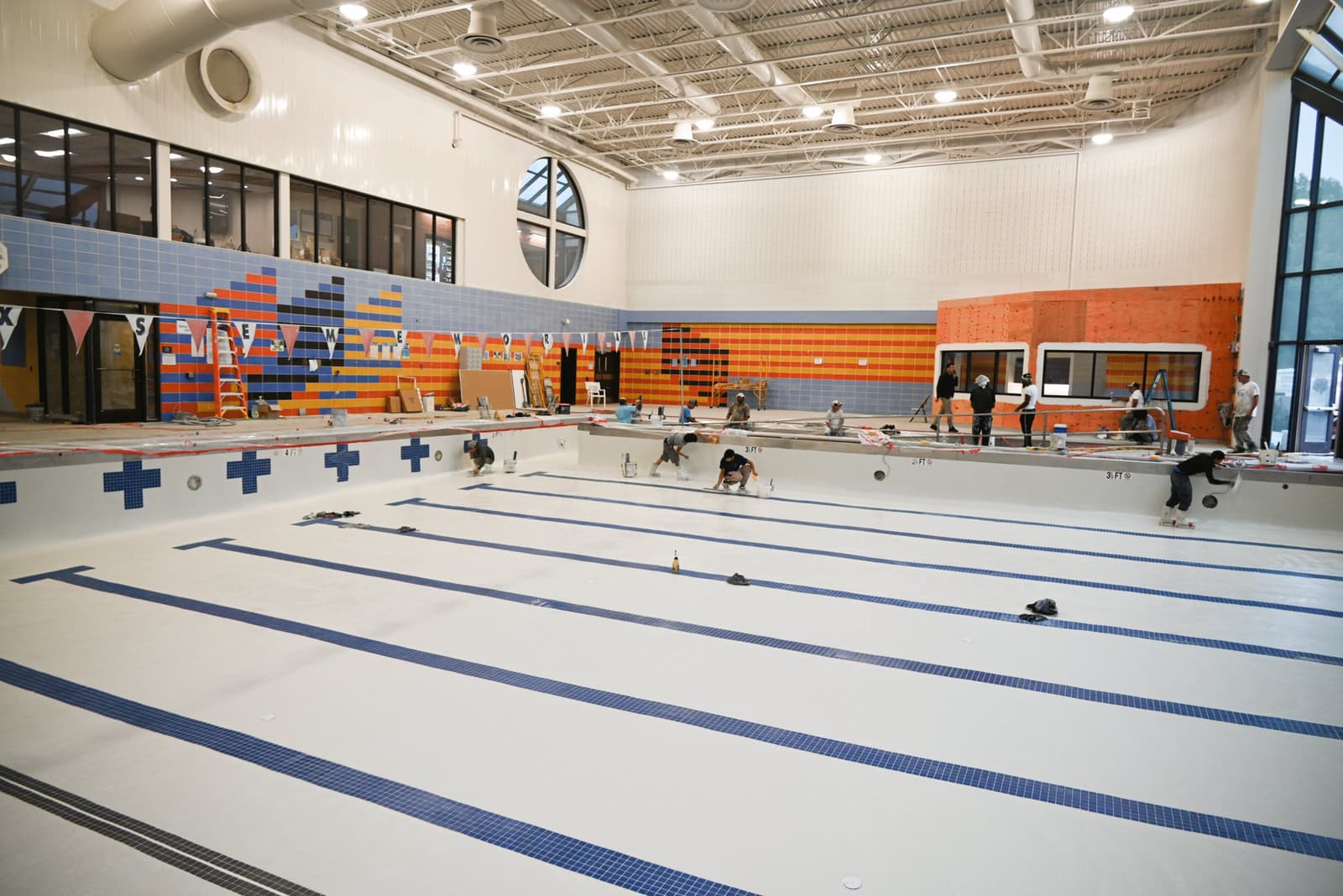
The thing that separates a fitness center from a strip-retail box of the same footprint is what happens under the deck. A gym is one big open volume, a free-weight floor, a turf zone, a court, that wants long structural spans and no interior columns. Then it packs that volume with people who breathe hard, and it often adds a pool, a sauna, and locker rooms that pump humidity into the air all day. The roof above has to span the open floor and resist a moisture load most owners never see coming until a ceiling tile stains. We design gym roofs for both at the same time.
We see this across Wilmington's gym geography. The big-box clubs along Oleander Drive and out toward Mayfaire and Military Cutoff sit in tilt-wall shells with stadium-sized open floors. Boutique studios in the converted buildings of the Cargo District and South Front carry older steel decks. The recreation and aquatics buildings tied to UNCW and the New Hanover County parks system add natatorium humidity on top of everything else. None of these gets the same roof plan, and the ones with water inside need the most careful assembly.
Vapor drive: the leak that comes from below
A natatorium or a busy locker wing generates interior humidity that pushes moisture up into the roof assembly from underneath, independent of how watertight the top membrane is. If the vapor retarder is missing or in the wrong position for our climate, that moisture condenses inside the insulation, kills the R-value within a few seasons, and corrodes a steel deck from the back side where no inspection can see it. So on any gym with a pool or steam room, we treat the vapor retarder as a design decision, not a line item. We review the existing assembly, confirm the retarder position is right for coastal North Carolina, and spec the buildup accordingly.
For those buildings our preferred system is a fully adhered 60-mil TPO or PVC. An adhered membrane eliminates the fastener field of a mechanically attached system, which both reduces the penetration count and gives a more vapor-resistant assembly at the top of the buildup. Gyms without water features can run a 60-mil TPO mechanically attached, which is appropriate and more economical.
High occupancy means a crowded roof
Ventilation scales with bodies. A packed group-fitness room, a busy cardio deck, and a pool enclosure each carry dedicated air handling, and that lands on the roof as units, intakes, and exhaust fans. Per thousand square feet, a gym roof typically carries two to three times the penetrations of an office building the same size. Every curb, duct boot, and conduit run needs precise flashing, and on a high-humidity building, the standard manufacturer detail often isn't enough at the curbs serving pool and locker exhaust, so we upgrade those.
We also document curb height before we price the job. Undersized curbs are a chronic defect on older gym buildings, and most membrane warranties require a minimum height above the finished roof. Where curbs are too low, we raise or rebuild them as part of the scope so the warranty is valid and the flashing has somewhere to terminate.
Coastal wind and cool-roof energy code
Wilmington sits in a high-wind zone, and a gym's large continuous roof plane catches uplift. Fastening patterns and adhered-system bonding have to be specified to the wind load for this part of the coast, not to an inland default. White TPO and PVC also satisfy the cool-roof reflectivity that most reroofing permits here now require, which helps with the cooling demand a high-occupancy building runs all summer.
Working around a club that never really closes
Many Wilmington gyms run from before dawn to near midnight, seven days a week, and aquatics facilities keep water chemistry in compliance around the clock. We coordinate the schedule with the facilities team before we mobilize: tear-off and dry-in windows are confirmed in writing each day, the manager gets a daily watertight status before the next operating cycle, and crew start times and noise limits near occupied locker rooms are set in the pre-construction plan. National operators route through corporate facilities and vendor approval; we work that process for chain locations and directly with independent owners and investors. Either way the closeout file is the same, permit and final inspection, manufacturer warranty registration, a roof zone diagram with the penetration inventory, and drain and flashing records.
Fitness center & gym roofing questions
How do you address condensation from pool and locker areas?
Interior vapor drive needs a properly positioned vapor retarder inside the assembly, not just a tight membrane on top. We review the existing insulation buildup, confirm the retarder position is correct for the coastal climate zone, and spec the assembly to keep moisture out of the insulation. Getting this wrong traps moisture and destroys R-value within a few seasons.
What membrane works best for a fitness center?
For gyms with pools or steam rooms, fully adhered 60-mil TPO or PVC is preferred because it removes the fastener field and improves vapor resistance. Gyms without water features can use 60-mil TPO mechanically attached, which is more economical.
How is work scheduled around 24-hour or early-morning operations?
We confirm the work schedule with the facilities team before mobilizing. Tear-off and dry-in windows are confirmed daily in writing, and the manager receives a watertight status report before each operating cycle. Crew start times and noise limits near locker rooms are documented up front.
Do you handle rooftop HVAC curb work?
Yes. Curb flashing is standard scope, and undersized curbs are raised or rebuilt to meet manufacturer warranty height requirements. We document every curb and its clearance before pricing the project.
What closeout documentation do you provide?
Permit and final inspection certificate, manufacturer warranty registration, a roof zone diagram with penetration inventory, drain and flashing inspection records, and photo documentation of completed details. Chain operators receive documentation formatted for their corporate facility systems.