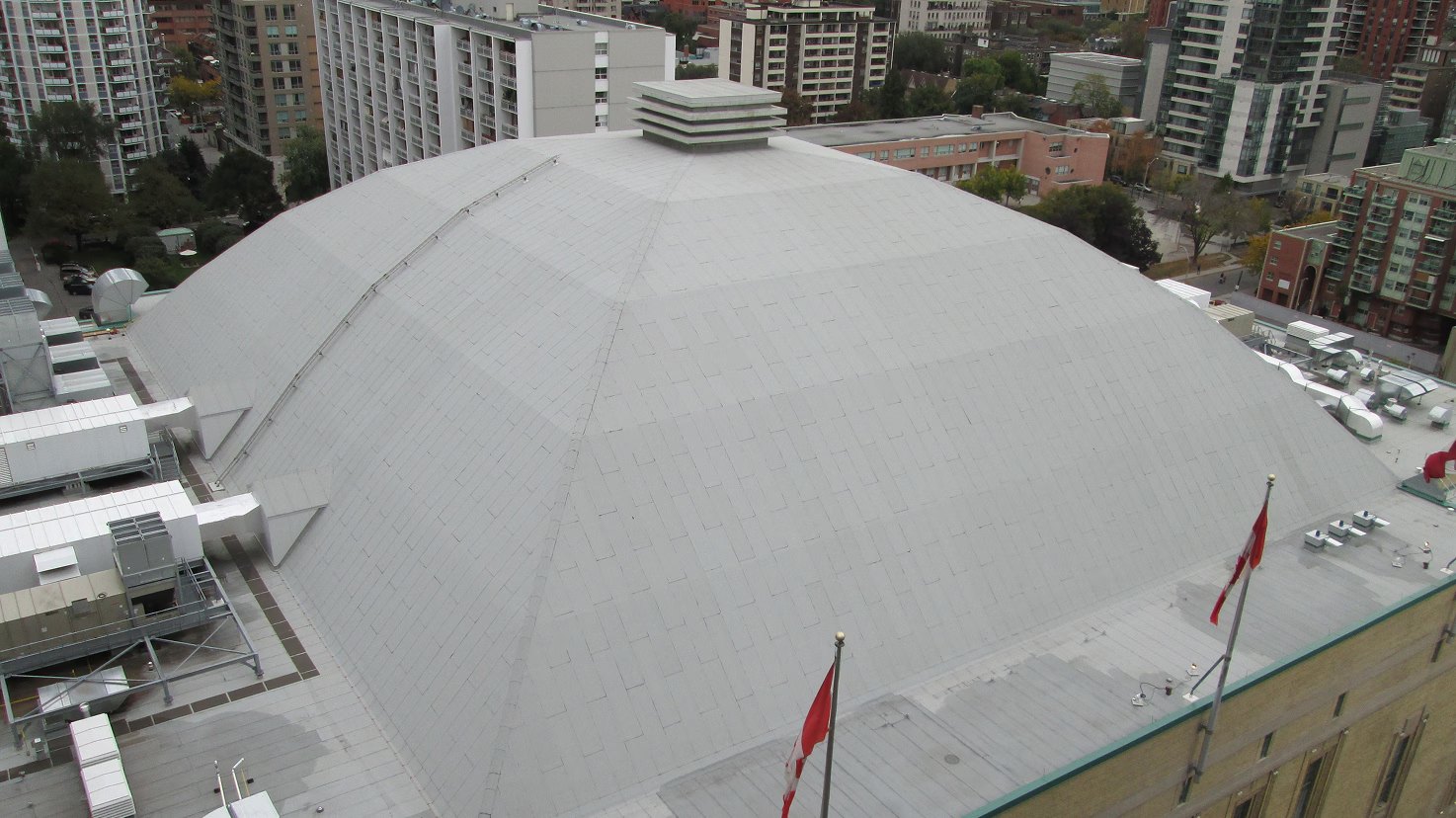
Food processing is a roof working against moisture from three directions at once. There is the washdown humidity rising off the floor every shift, the refrigeration and freezer loads parked on top of the deck, and Wilmington's own marine air pressing in from outside. Get the assembly wrong and you do not get a polite drip, you get condensation inside the deck, a leak over an active line, and a call to the plant's QA manager that ends in a product hold. The Cape Fear region has a real concentration of this work: seafood and shellfish houses tied to the working waterfront, cold-chain packers and distributors clustered around the Port of Wilmington and the US-421 industrial corridor, and food and beverage plants spread through New Hanover and Brunswick counties. We roof them as the regulated, refrigeration-heavy buildings they are.
The membrane has to pass the food-safety plan, not just the wind map
On a USDA- or FDA-regulated floor the material selection starts with what is allowed above a food-contact zone, not with what is cheapest per square. White TPO and PVC single-plies are generally acceptable over enclosed processing space, but the specific formulation and the install method have to be confirmed against the plant's own food-safety plan. The part outside contractors forget is the chemistry of the small stuff, many standard roofing adhesives, primers, and sealants are solvent-based and are not acceptable in a production environment. We clear every material, down to the flashing adhesive, with the plant's QA team before it comes through the gate.
Washdown humidity and the vapor it drives
A processing floor that gets hosed and sanitized every shift runs a high interior dew point all day, and that vapor wants to migrate up into the roof assembly. Pair that with Wilmington's humid coastal exterior and the vapor drive can run hard in one direction for most of the year. A vapor retarder placed for a dry inland plant is wrong here. We set the vapor-control layer to this climate and this floor's wet operating conditions, because the failure mode is invisible, corroding deck and soaked insulation that never shows as a surface leak until the structure is already compromised.
Refrigeration, freezers, and the load on the deck
Cold-chain plants put two problems on the roof. First is weight and penetrations: condensing units, large refrigeration lines, and rooftop mechanical concentrate load and create dozens of flashings. We confirm deck capacity before we add insulation thickness rather than assuming the structure carries it. Second is the cold chain itself. Over a freezer or blast-chill room the roof assembly has to hold thermal continuity, or warm humid air condenses inside the insulation. Tapered insulation over refrigerated bays gets designed around the room's actual operating temperature and the local vapor-drive direction, get that wrong and you rot the deck from the inside with no exterior symptom at all. Ponding makes it worse, adding thermal load on the refrigeration plant, so we drive drainage to the low point of every bay.
The sanitation window runs the schedule
Most of these plants run two or three shifts, and the only time the line is down and the floor is clean is the weekly sanitation window. Any work that opens the envelope over an active production area has to land in that window, with the QA manager confirming the floor is cleaned and protected before we open anything. We phase the whole project around the production calendar, not the other way around, and over refrigerated bays we coordinate with the refrigeration crew so nothing we do interrupts the cold chain.
Built for the inspection and the storm
Roof condition is a standard line on a USDA or FDA walk-through; inspectors look for leak staining, condensation, and deterioration that could let moisture in over product. We hand the QA team condition documentation and repair records they can produce on demand. And because this is a hurricane coast, every food plant gets a real emergency protocol, 24-hour contact, priority dry-in, and incident documentation that feeds the plant's own reporting if a storm opens the roof over the line.
Sanitation chemistry attacks from the inside too
It is not only product safety that drives the spec on a food plant, the sanitation program itself is hard on a roof. Hot caustic and acid washdowns release vapor that rises to the deck, and on a high-humidity coast that vapor does not clear. Over time it corrodes uncoated fasteners and bare steel deck from the underside, the same way it does in a car wash, which is why we favor coated or stainless fasteners and a vapor-control strategy over wet processing rooms rather than assuming the surface membrane is the whole defense. We also inventory every penetration the mechanical and refrigeration trades have added over the years, abandoned curbs, dead conduit, old drain leaders, because on an older plant those orphan penetrations are where the leaks actually start.
Drains, scuppers, and a hurricane downpour
Wilmington gets tropical rainfall that arrives by the inch per hour, and a food plant roof cannot pond that water over a freezer or a packaging line. We size and clear primary drains and add overflow scuppers where the existing system is undersized, and we keep the drainage path open through every phase so a sudden storm during the work has somewhere to go. Standing water over a refrigerated bay is both a structural problem and a thermal load on the plant, so drainage is a design item here, not an afterthought.
Food Processing Facility Roofing Questions
Can any roofing material go over a food production area?
No. USDA- and FDA-regulated floors require the membrane, adhesives, primers, and sealants to be confirmed acceptable for a food environment before install. We identify the plant's regulatory framework and clear every material with the QA team before it comes on site, solvent-based products in particular are often not allowed over food-contact zones.
How do you schedule work without stopping the line?
We build the phasing around the plant's production calendar. Work that opens the envelope over an active line goes into the weekly sanitation window, with the floor confirmed clean and protected first. Work over refrigerated bays is coordinated with the refrigeration crew to protect the cold chain.
What goes wrong with roofs over freezers and chill rooms?
If the assembly loses thermal continuity, warm humid air condenses inside the insulation and corrodes the deck with no surface leak to warn you. We design tapered insulation around the room's actual operating temperature and the local vapor-drive direction, and we drive drainage to each bay's low point so ponding does not add load on the refrigeration plant.
What happens if a leak opens over the line during production?
It is treated as a potential food-safety event. The protocol is immediate contact with QA and facilities for a product-hold call, priority mobilization for a temporary dry-in, and documentation support for the plant's incident report. We provide 24-hour emergency contact as part of closeout.
Can you support a USDA or FDA inspection?
Yes. Roof condition is a standard inspection item. We provide condition documentation and repair records the QA manager can produce to show proactive maintenance and the absence of moisture-entry points over production areas.