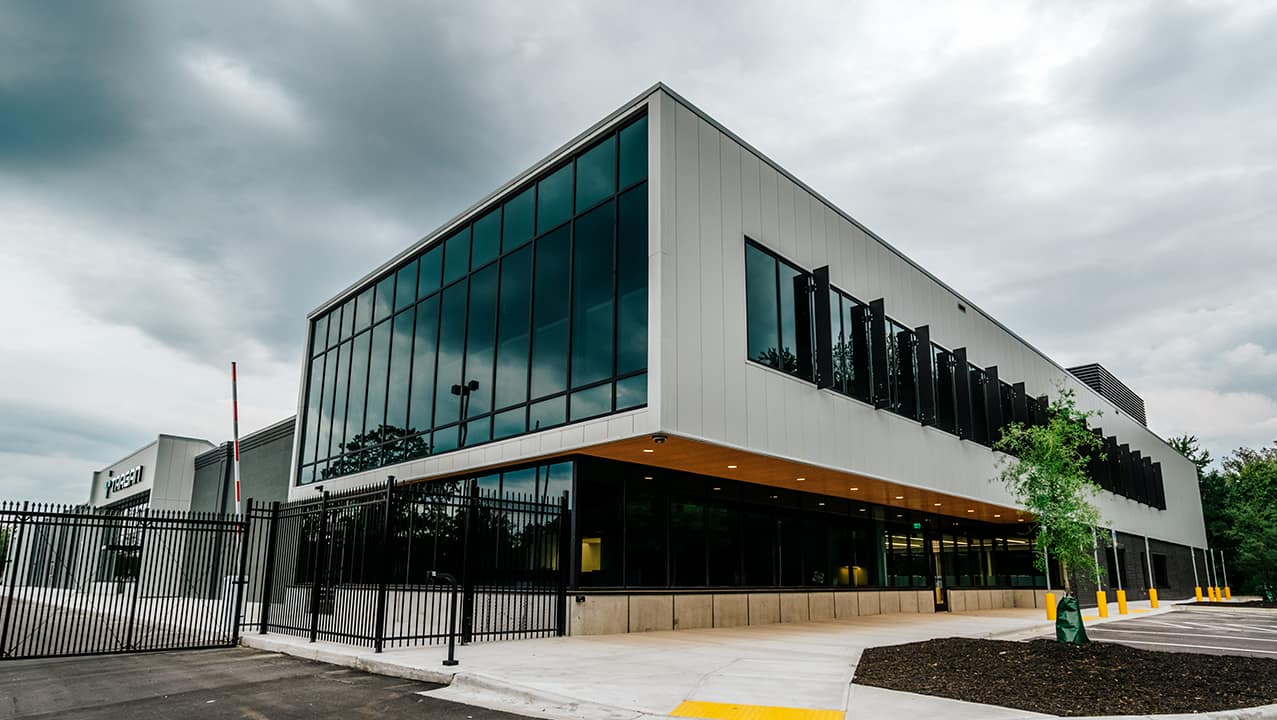
The roof over a pharmaceutical or laboratory building has one job that overrides every other: keep water away from what is below it. The product under a GMP ceiling, the instruments in an analytical lab, the samples in a cold vault, none of it tolerates a drip, and a single intrusion can trigger a batch quarantine, a deviation report, and a remediation bill that dwarfs the entire roofing contract. Wilmington has a real cluster of this work. PPD anchors a large pharma-services presence downtown along the riverfront, the UNCW research enterprise and the Center for Marine Science draw lab-grade buildings, and contract testing and biotech tenants have filled space throughout the New Hanover and Pender employment areas. These are not buildings you re-roof the way you re-roof a warehouse.
Access and credentials come before the membrane
On a regulated campus the first obstacle is the front gate, not the parapet. Active drug manufacturing carries FDA facility expectations; anything touching controlled substances brings DEA security rules; some research suites operate under select-agent or institutional biosafety oversight. A crew that arrives uncredentialed loses the mobilization day and can create a compliance event just by being in the wrong corridor. We start the credentialing, background checks, and escort planning weeks ahead of mobilization so the full crew is cleared on day one, and we map which roof zones sit over which controlled spaces before anyone climbs a ladder.
A roof crowded with critical mechanical
Pharma and lab roofs are some of the densest decks we work on. You have HVAC holding ISO-classified cleanrooms to tight temperature, humidity, and particle counts; chemical fume exhaust carrying corrosive vapor; HEPA-filtered biosafety stacks; process gas lines; and building-automation conduit, all penetrating the membrane in tight clusters. Every one of those is an individually flashed, individually documented detail. We do not bundle them.
Protecting cleanroom pressure differentials
Cleanrooms hold a cascade of positive or negative pressures between adjacent spaces, and that balance cannot wander while we work. Any flashing or curb work near a cleanroom supply or exhaust connection gets scheduled into a planned HVAC window with the facility's MEP team, and we verify the pressure differential recovers and that no dust entered the air path above the cleanroom envelope before we call that zone closed.
Exhaust chemistry and membrane compatibility
This is the detail standard contractors miss. Solvent and acid vapor leaving a lab exhaust stack can condense on the stack and rain a few feet of corrosive fallout onto the membrane right around it, a localized chemical attack a normal warranty never covers. We get the exhaust-stream composition from the MEP team and tend toward a 60-mil PVC, stepping up plasticizer density in the fallout zone around each stack. Bare TPO does not belong next to a solvent or acid exhaust.
The coastal-climate layer
Wilmington's marine air complicates the building science. High ambient humidity and salt loading push vapor drive in a direction that punishes a misplaced vapor retarder, and a lab that runs cold, dry interior conditions against that warm wet exterior can sweat inside the assembly. We set the vapor-control layer to this climate zone and this building's actual operating conditions, not a generic detail, and we core suspect areas before any recover so we are not building over trapped moisture above a clean space.
Documentation built for an audit
These owners are audited, so the paper has to hold up. We deliver contractor-qualification records, the site safety plan, reviewed material submittals, daily work reports, manufacturer installation documentation, FM Global or UL system listing where the spec calls for it, and registered NDL warranty paperwork, formatted to drop into the facility's own quality-management system. The closeout package is part of the scope, not a favor at the end.
Inspection and recover, not panic replacement
Most lab and pharma roofs do not need a full tear-off when the leak calls start; they need a contractor who will diagnose before quoting. We open the year with a baseline inspection, infrared or moisture scanning to map wet insulation, a close look at every curb and stack flashing, and a survey of the parapet and edge metal that takes the brunt of coastal wind. From that we build a repair-versus-recover-versus-replace recommendation tied to the building's risk, because the right answer over a cold vault is rarely the same as the right answer over an office wing of the same campus. On a regulated building the worst outcome is an emergency tear-off scheduled around a deviation report, so we would rather catch the failing flashing in a planned inspection than chase it after it has dripped on an instrument.
Living with a working campus
These sites do not shut down for us. Deliveries, loading docks, parking near the cleanroom intakes, and shared lab corridors all stay in use, so we stage materials and crane picks away from air intakes and pedestrian paths, keep the roof clean daily so no debris migrates toward an HVAC unit, and brief the facility's EHS contact before each phase. The goal is a re-roof the building's occupants barely notice.
Pharmaceutical & Laboratory Roofing Questions
How far ahead do you start the access and credentialing process?
Typically two to three weeks before mobilization. Background checks, badging, and any DEA or security clearance for crew working near controlled-substance areas take time, and we want the entire crew cleared before the start date rather than holding up the job at the gate. Escort and restricted-zone rules go into the pre-construction plan.
What membrane do you use near corrosive lab exhaust?
Generally a 60-mil PVC, with higher plasticizer density in the fallout zone immediately around each stack. We confirm the exhaust-stream chemistry with the MEP team and check it against the manufacturer's chemical-resistance guide. Standard TPO is not appropriate next to solvent or acid vapor.
How do you keep from disturbing cleanroom pressure?
Penetration and curb work near cleanroom HVAC connections is scheduled into a planned maintenance window with the facility's MEP team. After the work we confirm the pressure differential recovers and that no debris entered the air-distribution path above the cleanroom envelope before closing the zone.
Can you work on university and biotech research buildings?
Yes. Research campuses bring similar access and coordination demands, often with multi-tenant lab suites that each have their own HVAC and biosafety exhaust. We coordinate with Environmental Health & Safety and Institutional Biosafety oversight the same way we coordinate with a GMP plant's quality team.
What does your closeout package include?
Contractor qualifications, safety plan, reviewed submittals, daily reports, manufacturer installation documentation, FM Global or UL system listing where required, and registered NDL warranty paperwork, formatted for the facility's quality-management system.