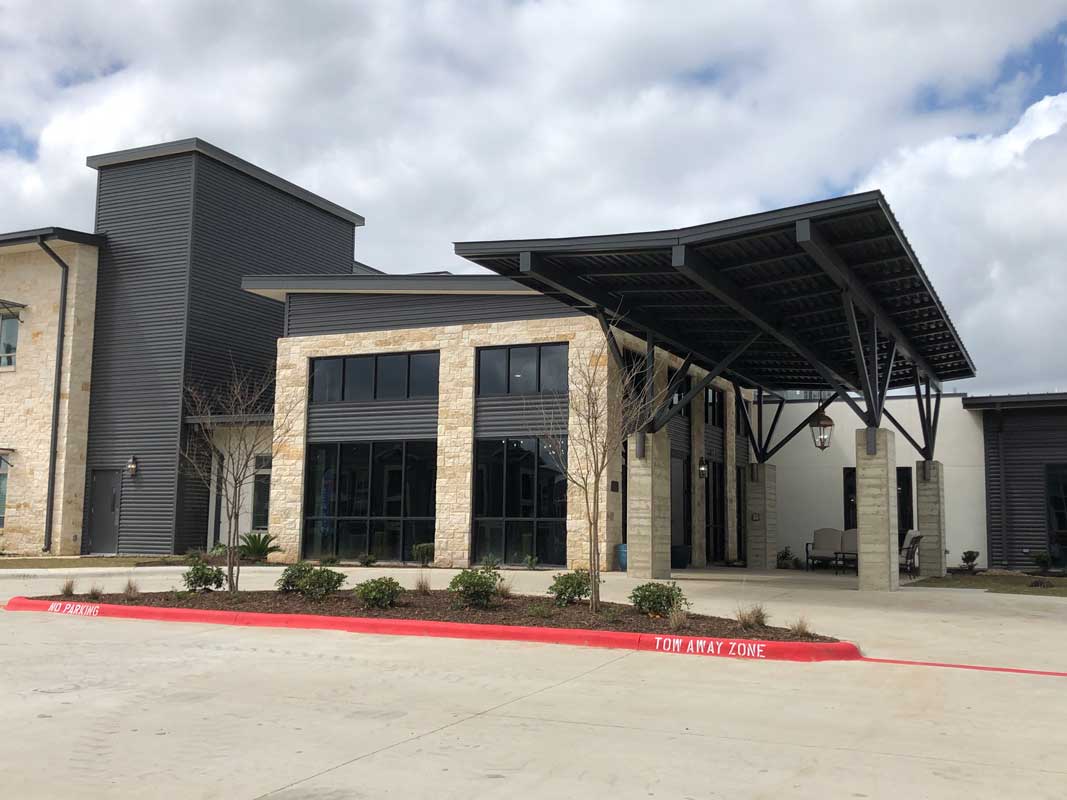
Senior Living Facility Roofing in Wilmington, NC is regulated by Life Safety Code requirements, CMS compliance standards, and state health agency rules that apply to skilled nursing, assisted living, and memory care facilities. Any roofing work at a licensed senior living facility in Wilmington must be coordinated with the facility administrator and the infection control program before work begins. Dust, debris, and airborne particulates entering resident spaces from an open roof section can trigger a state inspection finding, regardless of how minor the contractor's activity appears from the outside.
Occupied building sequencing for Senior Living Facility Roofing means working wing by wing, building a temporary protection system over each open section before residents below are exposed to weather risk, and restoring roof integrity before moving to the next phase. HVAC systems at senior living facilities in Wilmington, New Hanover County, Brunswick County, Pender County, and the Cape Fear coast must maintain continuous temperature and humidity control for resident comfort and infection prevention. Any roofing activity that disrupts mechanical equipment, penetrations, or unit curbs requires advance coordination with the facility's maintenance director and an approved contingency plan for occupied wing protection.
Regulatory inspections by CMS surveyors and state licensing agencies create real stakes for Senior Living Facility Roofing documentation. A roof in poor condition can appear as a maintenance deficiency in a survey report, which can affect the facility's operational license. Commercial Roofing of Wilmington provides roof condition documentation that uses plain language accessible to non-technical reviewers, photographs that show the current state of each roof section, and a priority-ranked repair or replacement recommendation that facility ownership can present to a board or equity partner.
Regional senior housing operators in Wilmington, New Hanover County, Brunswick County, Pender County, and the Cape Fear coast, including assisted living portfolios, nonprofit continuing care retirement communities, and publicly funded skilled nursing facilities, all require contractors who understand both the technical and regulatory dimensions of Senior Living Facility Roofing. Call +19109812504 or reach us at [email protected] to discuss a roofing assessment for your Wilmington senior living property.
Operational details that change the roof plan
Senior Living Facility Roofing work has to be sequenced around the activity under the roof. We review loading areas, customer or patient access, tenant hours, rooftop equipment, fire lanes, interior leak history, and any areas where noise, odor, debris, or temporary closures would create problems for the building.
Those constraints change quickly across Wilmington. A roof near Soda Pop District may need different staging than a roof near International Logistics Park, while coastal exposure near Independence Boulevard can move edge metal, drainage, and temporary dry-in higher on the priority list.
The finished scope has to be usable by more than one person. We write the findings so facility teams can understand the active roof condition, property managers can coordinate occupants, and ownership can separate urgent leak control from longer-term capital work without guessing what the field notes mean.
Before work starts, we also flag the assumptions that affect price and disruption: fall protection, material staging, interior protection, temporary dry-in, waste handling, and the roof areas where deck or insulation conditions may change the recommendation after investigation.
We keep that decision record attached to the roof area instead of burying it in a generic estimate. If ownership chooses a repair path, the record shows what was intentionally left for later maintenance. If the building needs capital planning, the same notes become the starting point for alternates, phasing, exclusions, and the schedule constraints that affect final pricing.
That is also where communication gets practical: who can approve a change, when the roof can be opened, which entrances or loading areas have to stay clear, and what photos or notes need to be captured before the work is closed out.
When those details are settled early, pricing conversations are cleaner and the roof work is less likely to turn into an emergency change order.
That record also gives managers a clear baseline for the next inspection cycle.
- Map the roof into work zones that match access, safety, and building operations.
- Flag roof areas where wet insulation, ponding, traffic paths, or equipment curbs change the budget.
- Keep the scope usable for ownership, facility teams, property managers, and bid reviewers.
Questions Owners Ask
What regulations govern Senior Living Facility Roofing?
CMS conditions of participation, state health agency licensing standards, and NFPA Life Safety Code requirements all create roofing-adjacent obligations that affect how work is sequenced, documented, and reported.
How do you manage infection control during Senior Living Facility Roofing?
We coordinate with the infection control officer, seal off roof access points to prevent dust entry, and limit open sections to areas that can be isolated from HVAC return air paths serving resident spaces.
Can Senior Living Facility Roofing be done while residents are in the building?
Yes, but only with a phased plan that keeps each open section protected at the end of every work day and maintains HVAC continuity for resident comfort and regulatory compliance.
What documentation do senior living operators need for roof work?
A written scope, contractor insurance certificates, an infection control plan, daily work logs, and a final condition report with photographs. CMS surveyors may ask to see contractor documentation during a survey visit.