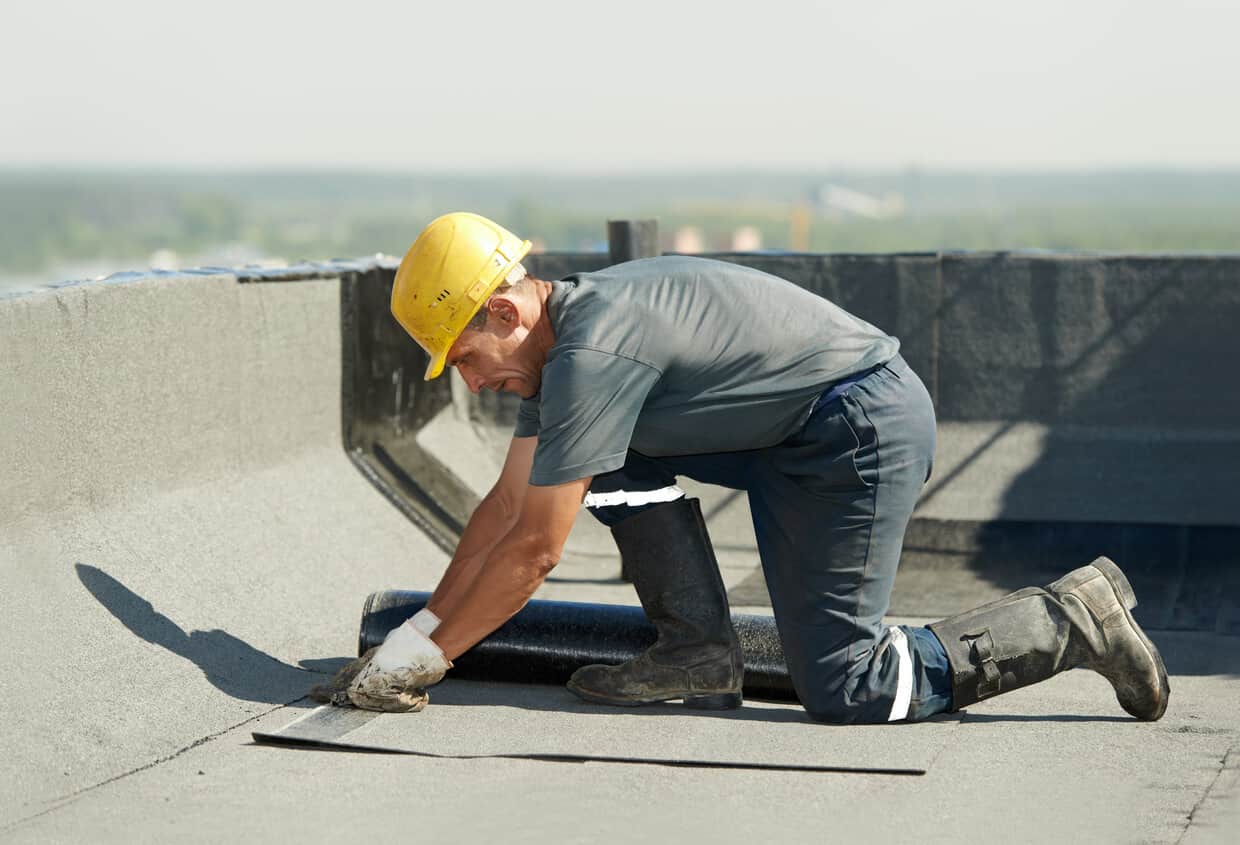
Built-up roofing has been the workhorse of flat commercial roofing for over a century, and in Wilmington's older building stock, particularly along the Cape Fear River waterfront, in the Historic Downtown district, and in the original Port of Wilmington industrial area, BUR systems are still in place on buildings constructed decades before single-ply membranes existed. These roofs deserve skilled hands, not a contractor who is only comfortable with modern membranes. We work with legacy BUR systems regularly and understand the difference between a system that has decades of life left with proper maintenance and one that has reached the end of its serviceable period.
The Cape Fear River waterfront and Historic Downtown commercial buildings present a specific challenge. Many of these structures were built in the late 19th and early 20th centuries with masonry walls, timber framing, and roof decks that were not designed for the attachment methods used on modern membrane systems. BUR was the system installed when they were built or last re-roofed, and in some cases it has been layered multiple times over decades. Before we recommend a course of action on any of these buildings, we conduct a thorough assessment, not just of the BUR surface, but of the deck condition, the parapet walls, and the drainage configuration. A historic building in the South Front District or Brooklyn Arts District requires a roofing approach that accounts for its structural history.
BUR assessment on coastal buildings involves looking at factors that inland contractors may not prioritize. The asphalt in older BUR systems degrades differently in Wilmington's climate than in drier inland markets. Sixty inches of annual rainfall, high humidity, and the UV intensity of a coastal location accelerate oxidation and alligatoring of the flood coat. Salt air affects the metal flashings and edge metal associated with BUR installations, lead flashings, galvanized gravel stops, and aluminum counterflashings all corrode faster on the coast. A BUR roof that might have another 10 years of life in Raleigh could be at the end of its practical service life in Wilmington if the flashings have deteriorated to the point where they cannot be sealed reliably.
The recover versus replacement decision is the most consequential choice on a BUR project. The International Building Code limits the number of roofing layers on a structure, and many of Wilmington's older commercial buildings are already at or near that limit from successive re-roofing projects. More importantly, the right answer depends on the condition of the insulation below the BUR plies. Wilmington's rainfall volume means that water infiltration into the insulation layer is common on any BUR system with compromised surfacing or failed flashings. We use infrared thermal imaging and core sampling to determine the extent of wet insulation before committing to a recover option. Trapping wet insulation under a new BUR system or recover membrane creates a long-term problem, ongoing degradation, potential mold growth, and a roof that never performs correctly.
When a full tear-off is the correct answer, we plan the logistics carefully. Occupied downtown buildings and active port-area industrial facilities have different constraints than a vacant warehouse. Debris management in historic districts requires hauling material without damaging adjacent properties or blocking narrow streets. We coordinate with building owners and tenants, stage dumpsters appropriately, and schedule the most disruptive phases of demolition during off-peak hours when business operations allow. On port-area buildings, we coordinate with facility managers around shipping and receiving schedules to avoid conflicts with loading dock access.
New BUR installation remains a legitimate option for commercial buildings where the system characteristics are a good fit. BUR provides excellent resistance to foot traffic, which matters on roofs with rooftop mechanical equipment, HVAC units, and condenser lines that require regular maintenance access. It is a redundant system, multiple plies mean that a single membrane breach does not immediately result in water intrusion. For certain commercial property owners in Wilmington who have had good long-term experience with BUR and want the same system in kind, we can install new BUR with modern base sheets, modified bitumen cap sheets, or granule-surfaced finishing plies. The system is not obsolete, it is simply a different solution than single-ply, with its own performance characteristics and maintenance requirements.
Flashing on BUR systems in Wilmington's coastal environment requires particular attention. The intersections between BUR and parapet walls, curbs, skylights, and penetrations are where failures concentrate. Historic downtown buildings often have brick parapets that have experienced decades of thermal cycling and moisture infiltration. The BUR flashing that ties into these parapets may be pulling away from the wall surface, allowing water to enter behind the membrane. We rebuild these flashing conditions properly, cleaning the masonry, applying appropriate primers, and installing new base flashing that is mechanically secured and sealed to withstand the wind-driven rain that comes with tropical weather systems.
Drainage on BUR roofs in the Wilmington market is a recurring issue. Many older BUR systems were designed with drainage configurations that made sense at the time of installation but have become inadequate as buildings have settled, drains have become obstructed, or the drainage path has been altered by subsequent rooftop equipment additions. Standing water on a BUR roof, especially one with an aged flood coat, is a faster path to failure than it would be on a silicone-coated system. Part of any BUR assessment we perform includes evaluating the drainage configuration and identifying whether modifications to the drain locations, scupper sizing, or roof slope are warranted as part of a restoration or replacement project.
We document every BUR project thoroughly, condition assessment photos before work begins, progress documentation through the project, and final photos of completed flashings and terminations. This documentation is valuable for insurance purposes, particularly in Wilmington where commercial owners may need to file storm damage claims after hurricane season. Having a clear pre-storm record of the roof's condition helps establish baseline documentation and speeds up the claims process with adjusters who may not be familiar with the specific characteristics of legacy BUR systems on coastal commercial buildings.
Questions Owners Ask
My downtown Wilmington building has a BUR system that's been there since the 1970s. Can it be repaired or does it need to come off?
It depends on two things: the condition of the BUR plies themselves and the condition of the insulation beneath them. We use infrared scanning and core sampling to assess the moisture content of the insulation before making any recommendation. If the insulation is dry and the BUR plies are still adhered and surfaced, targeted repairs and a restoration coating may extend the system's life significantly. If the insulation is wet or the plies have separated, a full tear-off is the right answer and we will say so directly.
How many layers of roofing can my building legally have?
The International Building Code, which North Carolina has adopted, generally limits commercial buildings to two roofing layers. Many older Wilmington commercial buildings already have two layers from previous re-roofing projects, which means the next roof work requires a complete tear-off regardless of the condition of the existing system. We verify the layer count during our assessment and factor it into the scope of work before providing a proposal.
Does BUR perform well in hurricane conditions?
A properly installed, well-adhered multi-ply BUR system has good resistance to wind uplift because the fully adhered plies distribute load across the entire field. The weak points in hurricane conditions are the perimeter flashings and edge metal, areas that see concentrated uplift forces. If the gravel stop, coping, and perimeter flashings on a BUR roof are in poor condition before a storm, those are the areas most likely to fail. Pre-hurricane season inspection and flashing repair is critical on BUR systems.
Is BUR still being installed on new commercial buildings or is it obsolete?
BUR is still installed on new commercial construction in circumstances where its characteristics are a good fit, high-traffic roofs, roofs where puncture resistance is prioritized, or situations where the owner has a strong preference for a proven system. It is less common than it was 30 years ago because single-ply systems are faster to install and have strong performance records. But calling BUR obsolete is not accurate, it is a different solution with its own strengths.
What causes BUR to fail on Wilmington buildings faster than it might elsewhere?
Three main factors accelerate BUR degradation in coastal Wilmington: the volume of rainfall (ponding water wears the flood coat and gravel surfacing), UV intensity combined with high humidity (oxidizes the asphalt binder faster), and salt air (corrodes the metal edge components and flashings). A BUR system with well-maintained flashings and good drainage can last 20 to 30 years in this climate. One with neglected flashings and chronic standing water may fail in 10 years or less.