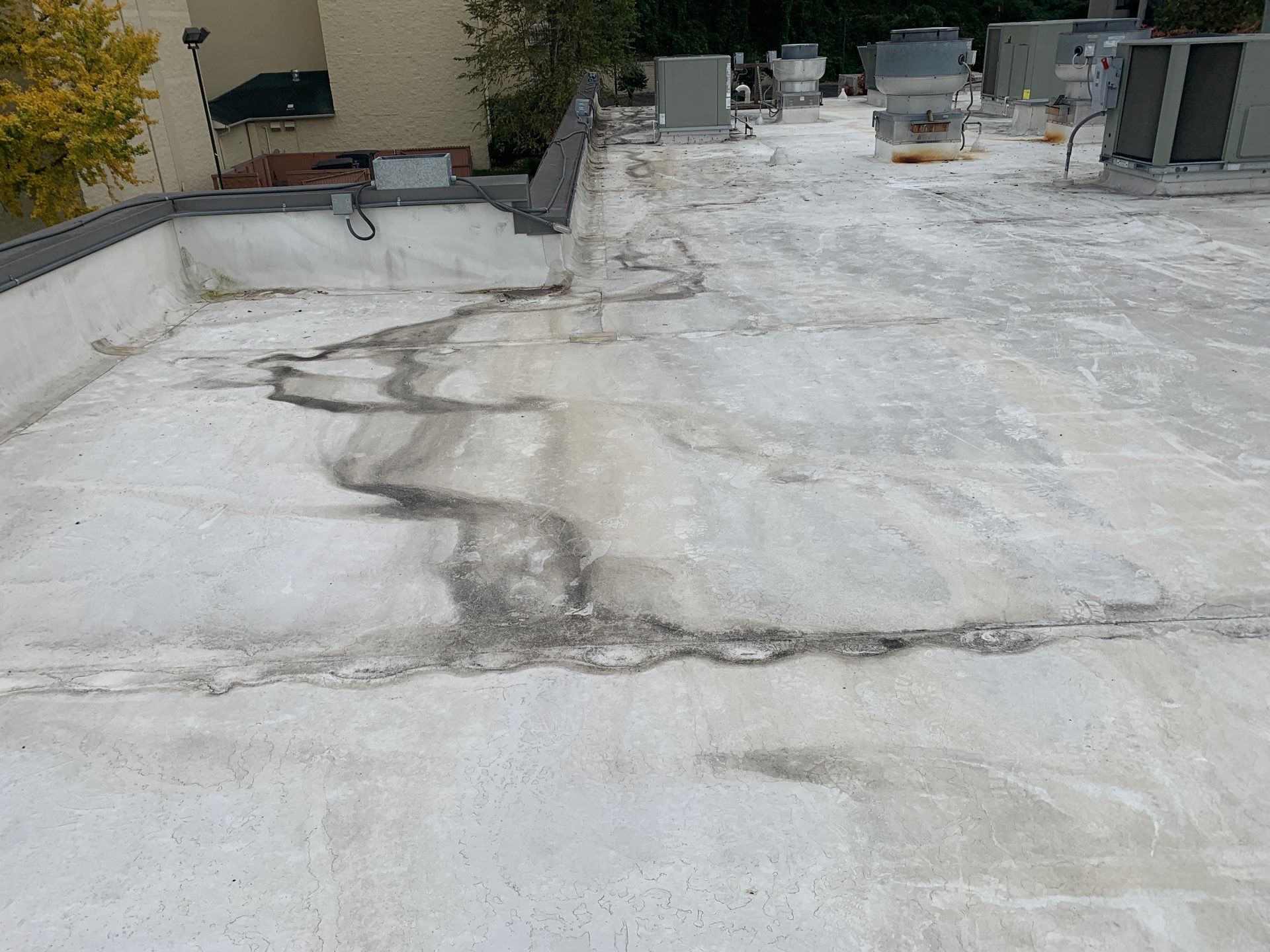
The Cape Fear coast sits in a stretch of the Atlantic seaboard where a landfalling or near-passing hurricane is a matter of when, not if, over the life of most commercial roofs here. Florence, Matthew, Dorian, and Isaias each put wind and water on Wilmington-area commercial buildings within the last decade, and each event produced its own mix of claim types — clean wind uplift losses, wind-driven rain intrusion through intact-looking membrane, and combined roof-and-flood losses in low-lying areas near the Cape Fear River and the ICW. A hurricane claim is not the same animal as a routine wind claim, and the documentation that supports it needs to account for that.
Named-Storm Deductibles
Most commercial property policies written for coastal North Carolina carry a separate, higher deductible that applies specifically once a storm is named and reaches a certain intensity threshold near the property — often written as a percentage of the building's insured value rather than a flat dollar figure. That deductible sits on top of, or in place of, the policy's standard wind/hail deductible, and it changes the math on whether a given repair is worth filing as a claim at all. We're not positioned to interpret your policy's deductible language — that's a conversation for your broker — but we do factor the likely claim math into how we scope repair recommendations after a named storm, since a full tear-off recommendation on a roof with marginal damage and a steep named-storm deductible may not make financial sense compared to a targeted repair.
What We Document After a Hurricane
Hurricane wind fields produce a distinct damage signature on low-slope commercial roofs: torn or lifted membrane at the perimeter and corners where uplift pressures concentrate, displaced or missing coping and edge metal, ballast scatter on gravel-surfaced built-up roofs, and wind-driven rain forced under laps and through vents and penetrations that would shed normal rainfall without issue. We photograph and map each of these conditions, note wind direction where it's discernible from the damage pattern, and check for wet insulation with infrared scanning wherever water intrusion is suspected but not visibly obvious from the roof surface. On buildings near the river or the ICW that also took on storm surge or ground-level flooding, we're careful to draw a clear line in our documentation between roof-caused water damage and flood damage entering from below — the two are usually covered under different policy provisions.
Timing and Adjuster Volume
After a significant hurricane, carriers deploy additional adjusters to the region and those adjusters are often working through a large volume of claims on a compressed timeline. Documentation that's organized and complete on first submission tends to move faster through that process than a claim that requires the adjuster to request follow-up information. We try to get eyes on a damaged roof within the first few days after a storm, while the damage is still in its original post-storm condition and before subsequent weather or emergency tarping changes what's visible.
Complete Scope After a Named Storm
A hurricane repair scope needs to account for more than the visibly torn membrane. Wind damage to edge metal and coping is a common cause of subsequent leaks if it's not replaced to current code, and code officials in New Hanover, Brunswick, and Pender counties will typically require updated flashing and edge details on any permitted reroof, regardless of what a partial patch would otherwise cost. Where a membrane manufacturer's warranty is still in force, a patchwork repair across a large wind-damaged field can also void coverage on the surrounding intact membrane — a cost worth raising with the adjuster even when it isn't obvious from the storm photos. We write scopes that include these items so the claim reflects the actual cost of a correct, code-compliant repair.
We're your roofing contractor, not a public adjuster — we document and substantiate the roof damage so you and your adjuster work from an accurate scope. If your building took hurricane damage, we can get on the roof, document what's there, and meet your adjuster with a clear scope in hand.
Questions Owners Ask
What is a named-storm deductible and how does it affect my claim?
Many commercial property policies in coastal North Carolina carry a separate, higher deductible that applies specifically to damage from a named storm, often written as a percentage of the building's insured value rather than a flat dollar amount. That deductible applies before any payment is issued on hurricane-caused roof damage. Check your policy's declarations page or ask your broker which deductible applies to a given storm event.
How soon after a hurricane should I have my roof inspected for insurance purposes?
As soon as it's safe to access the roof — ideally within the first few days after the storm passes. Damage evidence is clearest immediately after the event, before tarping, debris cleanup, or additional weather changes the picture. We prioritize post-hurricane inspection requests during active storm response.
Does my hurricane roof claim cover wind damage separately from flood damage?
Generally yes. Wind and wind-driven rain damage to the roof itself is typically covered under standard commercial property wind/hail provisions, while storm surge and ground-level flooding require separate flood coverage. We document the roof-level wind and water intrusion damage and note where it's distinct from flood damage entering the building from below.
My roof looks fine from the ground after the storm — is it worth an inspection?
Yes. Wind-driven rain intrusion and lifted seams on a low-slope roof are frequently invisible from ground level or even from a casual walk of the roof surface. Infrared scanning and a close inspection of laps, penetrations, and perimeter details often find damage that isn't apparent otherwise, and documenting it while the storm event is fresh is easier than trying to establish causation months later.
Can you help if a building took both roof damage and flood damage in the same storm?
We document the roof-level damage — wind and wind-driven rain intrusion — and clearly note in our report where that damage is distinct from ground-level flood damage, since the two are typically covered under different policy provisions. For the flood damage portion, you'll want to work with whoever handles your flood policy; our documentation focuses on the roof.