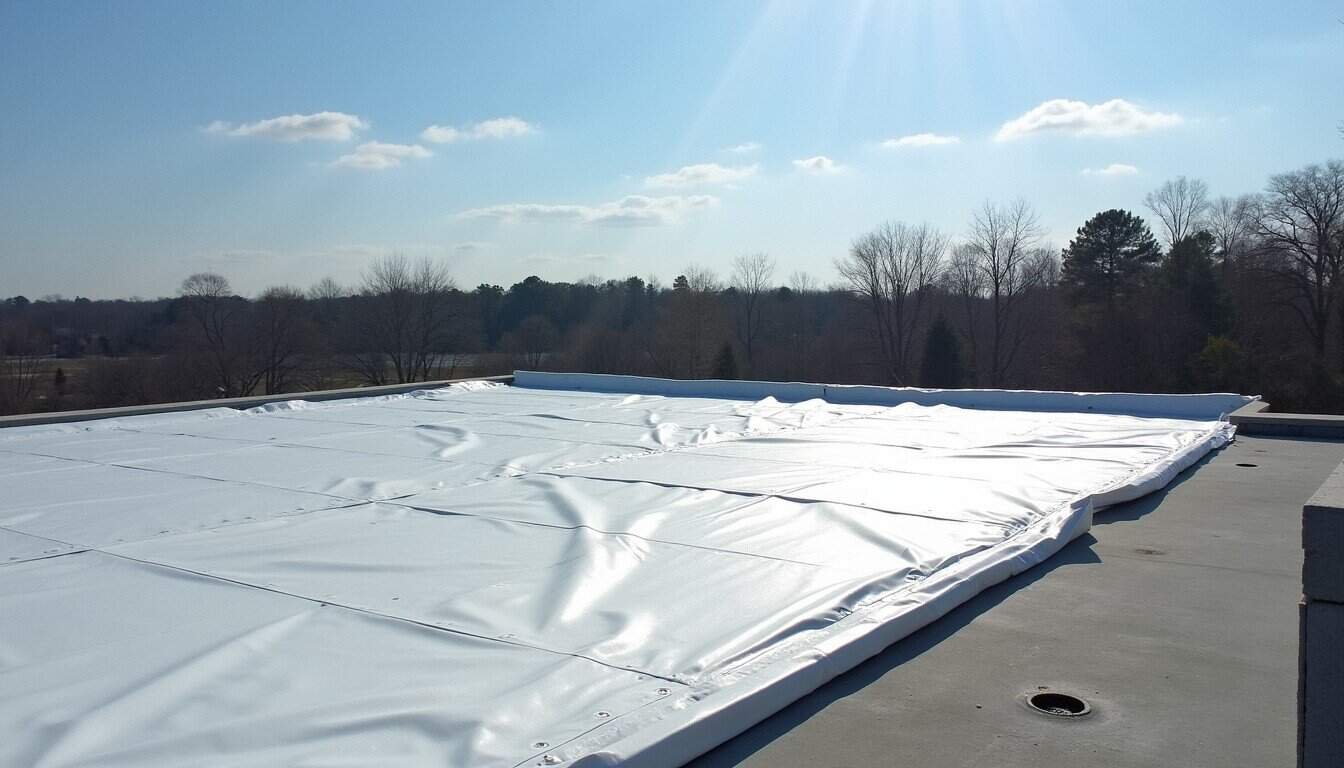
Not every commercial roof claim in Wilmington traces back to a named hurricane. Between spring and fall, fast-moving squall lines and severe thunderstorms move off the Atlantic and through New Hanover, Brunswick, and Pender counties with straight-line wind gusts that can match or exceed the wind speeds of a weaker tropical system. In the cooler months, nor'easters — slow-moving coastal low-pressure systems that park off the Carolina coast for a day or two — bring sustained wind and wind-driven rain that stresses a low-slope roof differently than a quick summer squall. Both are common causes of legitimate commercial roof claims here, and both get documented and scoped the same careful way a hurricane claim would be, even though the policy language and deductible that apply are often different.
Standard Wind/Hail Deductible vs. Named-Storm Deductible
Most commercial property policies on the Cape Fear coast apply two different deductible structures depending on the cause of loss: a standard wind/hail deductible for ordinary severe weather, and a separate, usually higher, named-storm deductible that only triggers once a system is designated and reaches a wind-speed threshold near the property. Thunderstorm wind, a squall line ahead of a cold front, and a non-tropical nor'easter typically fall under the standard deductible rather than the named-storm one. That distinction matters for whether filing a claim makes financial sense — a repair that wouldn't clear a steep named-storm deductible may well clear the standard wind/hail deductible. We're not in a position to interpret your specific policy, but understanding this difference is part of why we recommend having any significant wind event inspected rather than assuming it's not worth filing.
What Non-Hurricane Wind Damage Looks Like
Straight-line thunderstorm wind tends to produce sharp, localized damage — a section of membrane lifted at a corner, a piece of coping torn loose, a rooftop unit's curb flashing pulled free — concentrated where the gust hit hardest. Nor'easter wind is a different loading pattern: sustained wind over many hours, sometimes a full day or two, works at fasteners, seams, and edge details continuously rather than in a single sharp event, and the resulting damage is sometimes more diffuse — a general loosening across a field rather than one obvious tear. We inspect for both signatures. On the office and retail buildings along Oleander Drive and Military Cutoff, and the industrial buildings around Northchase and the ILM Business Park, we see both damage types depending on the roof's age, fastening pattern, and exposure.
Documentation for a Non-Hurricane Wind Claim
The documentation process is the same discipline we apply to any storm claim: photographs of every damaged area, a roof-plan map showing location, written notes on the likely wind mechanism, and moisture assessment wherever water intrusion is suspected under an otherwise intact-looking membrane. Because non-hurricane wind events don't come with the same regional news coverage and carrier surge staffing that a hurricane does, timely inspection matters just as much — an adjuster reviewing a thunderstorm wind claim needs the same clear, complete evidence a hurricane claim would require, and there's no regional storm-response context to lean on if the documentation is thin.
Scoping the Repair Correctly
A wind-damaged roof section often needs more than a spot patch to be repaired correctly. If the surrounding membrane is a different age than the damaged section, code and warranty requirements can call for broader matching work than the visible tear alone suggests, and any edge metal or coping replacement needs to meet current code detail requirements rather than simply reproducing what failed. We write our scope around what the repair actually requires — including code-compliant edge details and appropriate matching — so the claim estimate reflects the real cost of a correct fix.
We're your roofing contractor, not a public adjuster — we document and substantiate the roof damage so you and your adjuster work from an accurate scope. If a recent storm left wind damage on your roof, we can inspect it, document what we find, and give you a straight answer on whether it's worth filing a claim.
Questions Owners Ask
Is a thunderstorm wind claim treated differently than a hurricane claim?
Often yes. Many commercial policies apply the standard wind/hail deductible, rather than the higher named-storm deductible, to damage from thunderstorm wind, squall lines, or a nor'easter that isn't a named tropical system. That can make a non-hurricane wind claim more financially worthwhile to file even for damage that looks similar to hurricane wind damage.
Do nor'easters cause real damage to commercial roofs here?
Yes. A nor'easter can produce sustained high wind over a day or two, which is a different loading pattern than a short, sharp squall line and can work loose fasteners, seams, and edge details that a brief gust wouldn't affect. Wilmington sees several of these coastal low-pressure systems each fall and winter.
How do I know if wind damage to my roof is significant enough to file a claim?
Any lifted seam, torn membrane, displaced flashing, or missing edge metal is worth an inspection, even if it looks minor from the ground. Small wind openings are frequently the entry point for water intrusion during the next rain event. We can inspect and tell you honestly whether what we find is claim-worthy or routine maintenance.
Can I file a claim for wind damage that happened a few weeks ago?
Yes, as long as you're within your policy's notification window, though earlier is always better for documentation quality. If time has passed, we document the current condition and note where the damage pattern is consistent with wind rather than gradual wear, which supports the claim even without same-week photos.
Will my roof need a full replacement after a wind event, or just a repair?
Most non-hurricane wind claims we see are targeted repairs — a section of membrane, edge metal, or flashing — rather than full roof replacements. We document the actual extent of the damage and scope accordingly rather than defaulting to the largest possible repair.